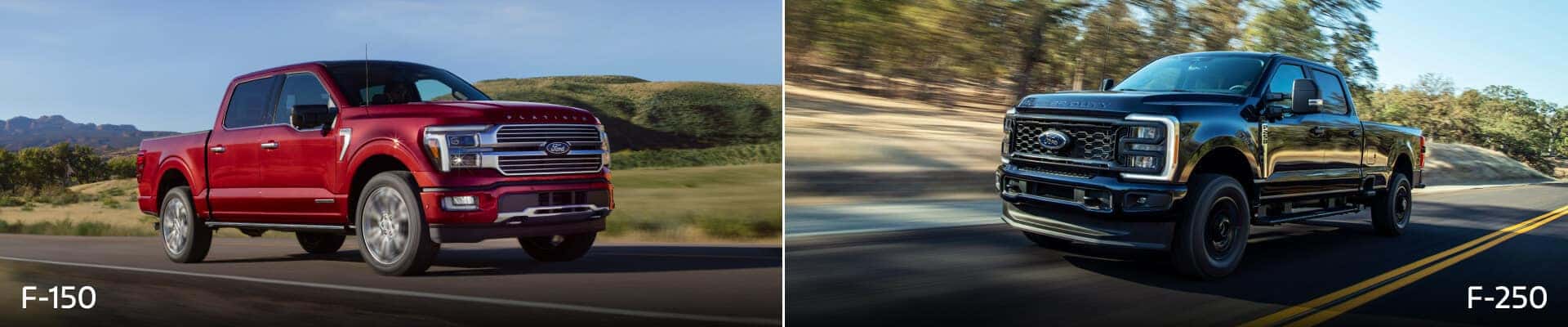
When it comes to dependable performance and versatility, a 2025 Ford F-150 vs. Ford F-250 comparison reveals two powerhouse trucks that excel in different ways. As established players in the pickup market, the F-150 and F-250 deliver impressive performance and capabilities with an array of engine options, each catering to customers' specific requirements and preferences.
Our team at Lake Keowee Ford goes over the key differences between the Ford F-150 and F-250 in this guide, focusing on interior features, towing capacity, and fuel efficiency to help you determine which truck best suits your lifestyle and workload.
No Ford F-150 vs. Ford F-250 trucks comparison would be complete without reviewing the trim configurations available for each truck type. Each truck comes in the following versions:
The Ford F-150 has three additional models available: the Ford F-150 STX, which features a black mesh grille and body-color bumpers; the Ford F-150 Tremor, designed for all-terrain adventures with improved approach and departure angles; and the Raptor edition made with 4x4 power with a Hi-Lock transfer case, heavy-duty skid plates, and running boards. The F-250 has an available Tremor package for increased off-road capabilities, thanks to selectable Rock Crawl and Trail Control.
You won't find the Limited trim for the 2025 models. However, many of its same premium features can be found in the Platinum, which includes upgrades like a Head-Up Display, Pro Trailer Hitch Assist, and a B&O® sound system by Bang & Olufsen®.
The Ford F-150 also offers an all-electric option, the Ford F-150 Lightning. This truck is available in some of the same trim levels provided by its fuel-powered counterpart, including the XLT, Lariat, and Platinum. Browse the new Ford inventory on our Lake Keowee Ford website for a closer look at each of the trims and models available.
To give you an idea of how the F-150 and F-250 stand side by side, here's a glance at the XL trim for each model.
| 2025 Ford F-150 XL | 2025 Ford F-250 XL | |
| 2.7L EcoBoost V-6 | Standard Engine | 6.8L V-8 |
| 325 | Standard Horsepower | 405 |
| 400 lb-ft | Standard Torque | 445 lb-ft |
| 13,500 lbs1 | Max Towing Capacity | 23,000 lbs1 |
| 2,440 lbs2 | Max Payload Capacity | 4,246 lbs2 |
| 4x2 or 4x4 | Drivetrain | 4x2 or 4x4 |
| 52.8 - 77.4 cu ft | Cargo Bed Space | 65.4 - 78.5 cu ft |
| 209.4 - 243.9 in | Length | 231.8 - 266.2 in |
| 75.4 - 77.5 in | Height | 78.9 - 81.6 in |
| 8.2 - 9.8 in | Ground Clearance | 9.4 - 10.2 in |
The 2025 Ford F-150 has a solid menu of powertrains, each bringing excellent specs to the table:
The Ford F-250 can be equipped with one of the following, depending on your chosen configuration:
The Ford F-150 provides drivers with a fuller range of powertrains and hybrid efficiency, but the F-250 delivers more in terms of capability, due to turbo diesel powertrain options and stunning torque values. You can custom-order your Ford to get the specific model, style, and engine configuration you desire.
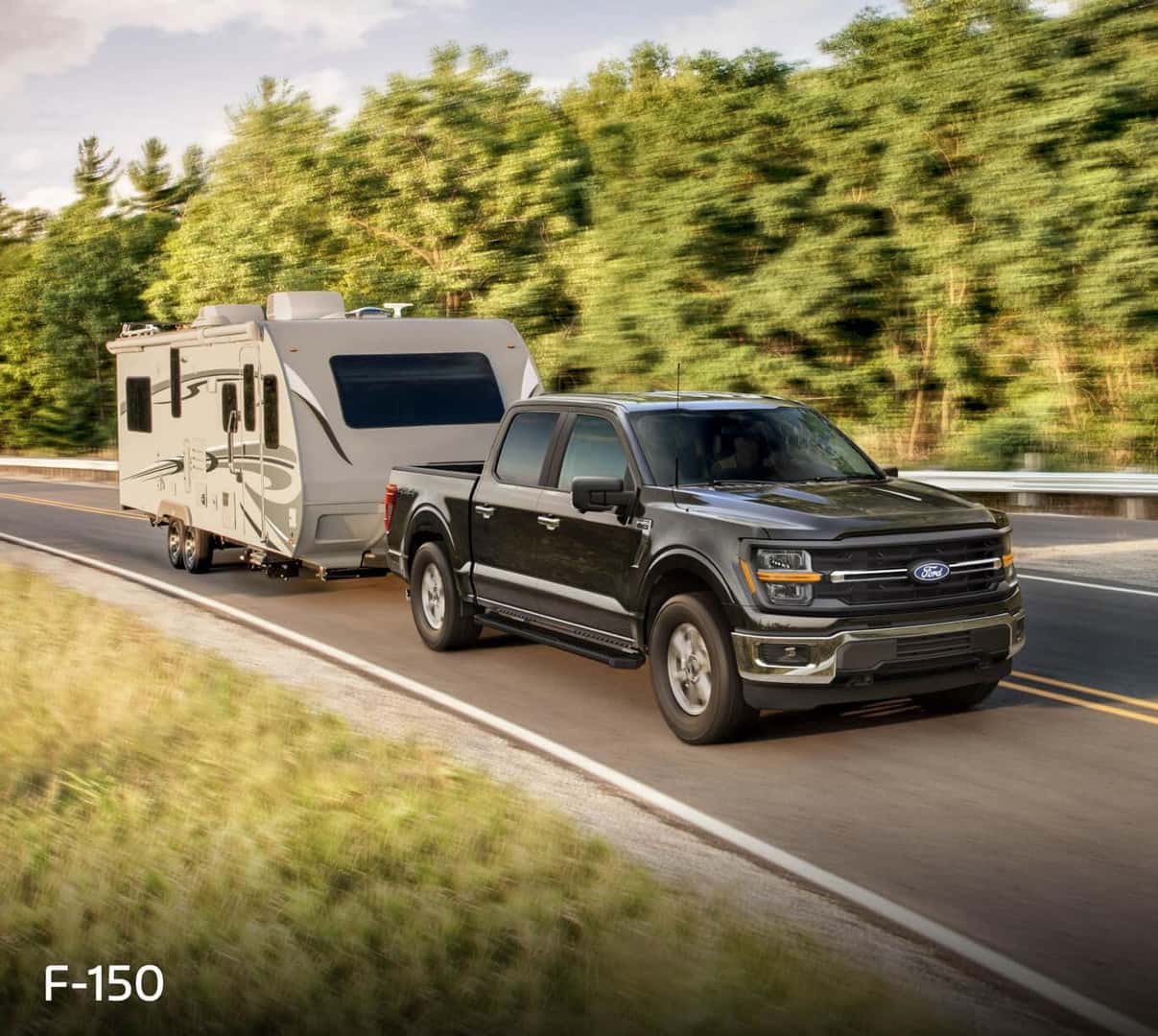
Towing capacity for the 2025 Ford F-150 vs. Ford F-250 varies depending on body style, drivetrain, and trim. That being said, the new Ford F-150 hits a max towing capability of 13,500 pounds and a maximum payload of 2,440 pounds when properly equipped.
The 2025 Ford F-250 excels in towing power, presenting drivers a jaw-dropping 23,000 pounds and a maximum payload of 4,246 pounds when configured with the right equipment and powertrain.
Factors that affect the available towing capacity include your chosen cab and bed, any optional packages and additional accessories, and total payload.
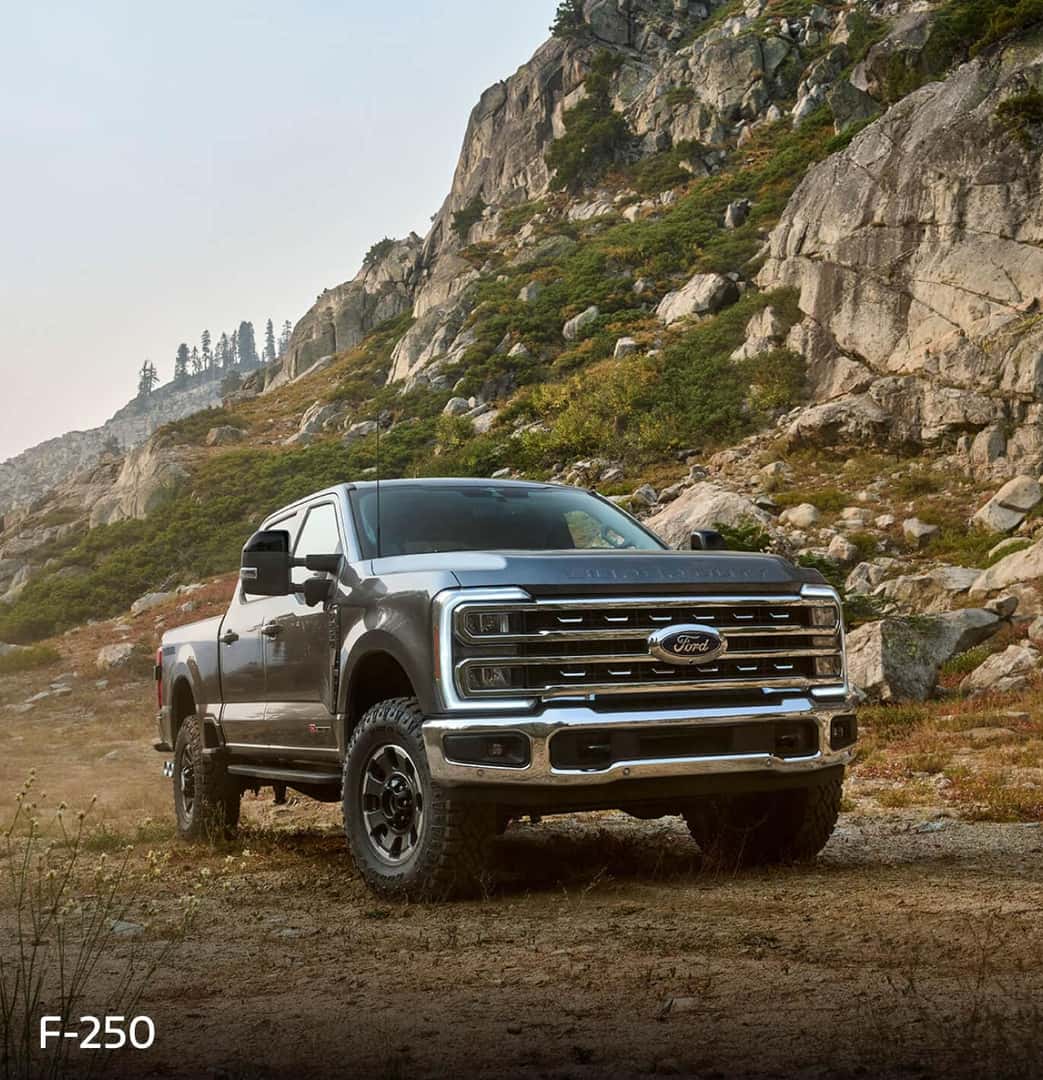
The fuel economy of the Ford F-150 and Ford F-250 trucks is influenced by multiple elements. The variation in fuel efficiency can be attributed to the trim, type of engine, and the overall weight carried, including cargo, payload, or towable trailers. You can find fuel-efficient Ford variants from both the F-150 and F-250 truck lineups.
While the EPA has not disclosed the fuel economy ratings for the 2025 model year, the 2024 F-150 can achieve up to an EPA-estimated 19/25 MPG (City/Highway)3 with the 2.7-liter engine and an impressive 22/24 MPG (City/Highway)3 with the 3.5-liter hybrid powertrain; we expect similar numbers for the latest iteration.
At this time, the EPA does not regulate the fuel economy for heavy-duty trucks like the F-250; however, you can likely expect the MPG values to change based on your chosen gas or diesel engine, with the turbo diesel potentially being the more fuel-efficient setup.
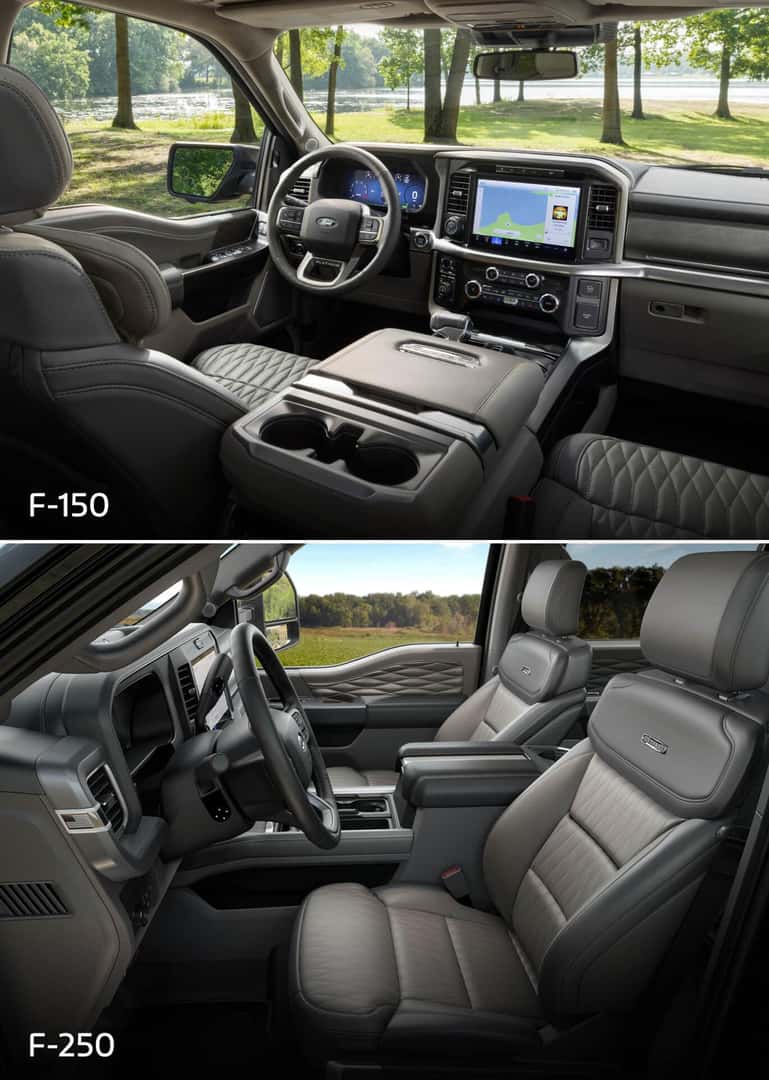
When it comes to interior design, technology, and comfort, the Ford F-150 and Ford F-250 each have a well-appointed cabin tailored to different needs. Both trucks have three cab options that include a Regular Cab, SuperCab, and SuperCrew.
In the Ford F-150, every trim comes equipped with a 12-inch touchscreen featuring SYNC 4 and a 12-inch digital productivity screen for enhanced connectivity and convenience. Meanwhile, the Ford F-250 includes a standard 8-inch touchscreen with SYNC 4 and a 4.2-inch productivity screen, with higher trims upgrading to a 12-inch touchscreen and productivity display. One advantage of the F-250 is the optional upfitter switches that provide power for your accessories – these are not available on the F-150.
Both trucks come standard with essential safety features like Hill Start Assist, a Rear View Camera, and Trailer Sway Control. However, the F-150 includes additional standard safety technologies, such as Forward Collision Warning and a Lane-Keeping System, giving it a slight edge in driver assistance systems.
The F-150 also includes Pro Trailer Backup Assist, while the F-250 stands out with its available Pro Power Onboard system, delivering extra functionality for job sites and outdoor adventures.
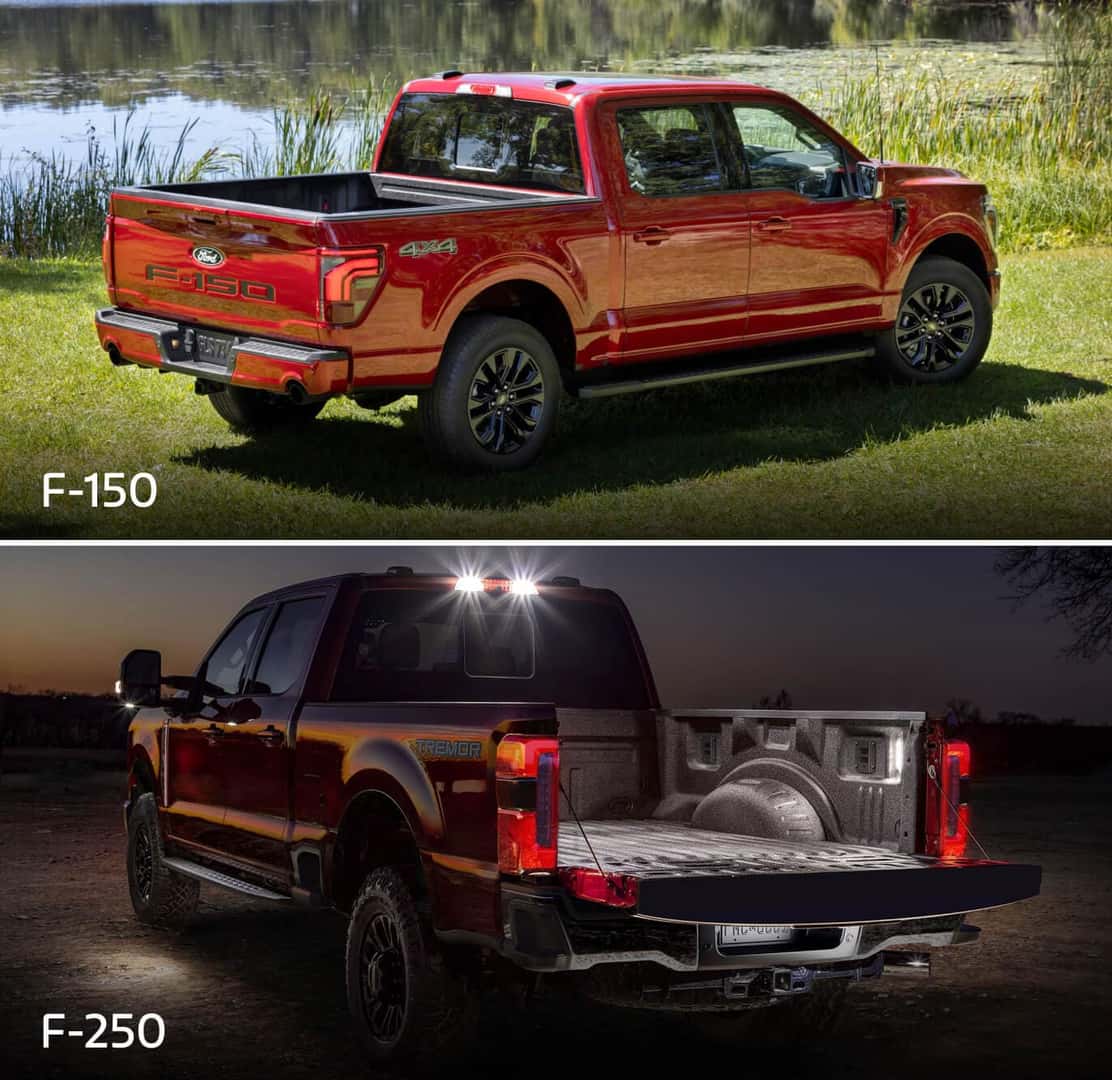
When it comes to bed sizes, the Ford F-150 offers 5.5-foot, 6.5-foot, and 8-foot options. In contrast, the heavy-duty Ford F-250 comes with 6.75-foot and 8-foot bed configurations.
With multiple configurations available for both the Ford F-150 and Ford F-250, their dimensions can differ significantly. However, the F-250 is generally larger overall than the F-150, regardless of the cab style or bed length you choose.
For example, the 2025 Ford F-150 XL Regular Cab with an 8-foot bed measures 228.1 inches in length and 79.9 inches wide with mirrors folded. 2025 Ford F-250 XL Regular Cab with an 8-foot bed comes out to 231.8 inches long and 80 inches wide not including mirrors.
Ready to see how the 2025 Ford F-150 and F-250 stack up in person? See them both by scheduling a tour at Lake Keowee Ford! Whether you're looking for a full-size truck with impressive versatility or a heavy-duty powerhouse for tough tasks, we have both models ready for you to explore.
Whichever Ford F-Series you choose, be sure to book regular maintenance appointments at our Ford service center to keep your Ford truck running at peak efficiency and performance.
Visit us today, take a test drive, and find out which Ford truck is the perfect fit for your needs. Our team is here to help you make an informed decision and drive home with the right truck for you!
The Ford F-250 truck has a higher maximum towing capacity than the Ford F-150 truck models. The maximum towing capacity for the Ford F-250 is 23,000 pounds when properly equipped, whereas the Ford F-150 scales it back to a maximum limit of 13,500 pounds when properly equipped. Factors that affect towing capacity include engine type, trim, and cargo weight.
The fuel economy of both trucks is influenced by multiple factors, including engine type and the model you opt for. Both trucks have many engine options to choose from, including hybrid and all-electric variants available for the F-150. While the EPA estimates for the 2025 models have not yet been disclosed, the 2024 Ford F-150 achieves up to an EPA-estimated 19/25 MPG (City/Highway).3
The F-150 and F-250 trucks share several trims, each providing various amenities for enhanced comfort and luxury. Among these editions, the King Ranch stands out as the epitome of comfort with a heated leather steering wheel and heated and ventilated seats. The Platinum trims of both trucks include a Head-Up Display and a premium B&O® sound system.
Safety features available or standard on Ford trucks include a Rearview Camera with Dynamic Hitch Assist to help in reversing and hitching up, AdvanceTrac with Roll Stability Control, four-wheel anti-lock brakes, Curve Control, a Tire Pressure Monitoring System, and an Advanced Security Pack. The F-150 has a bit more as standard, including Forward Collision Warning and a Lane-Keeping System.
Yes, each truck has Regular Cab, SuperCab, and SuperCrew Cab options. The Regular Cab provides seating for three, while the SuperCab and SuperCrew cab can fit up to six passengers. A SuperCrew and SuperCab both have four doors. The SuperCab rear doors are smaller and open backward. The SuperCrew cab has the largest cabin of the three cab choices, with four full-size doors that open in the same direction.
1When properly equipped. See dealer for details.
2Maximum payload capabilities are for properly equipped vehicles
with required equipment and vary based on vehicle configuration,
accessories, and option content. Horsepower, torque, payload and towing are
independent attributes and may not be achieved simultaneously.
3EPA-estimated city/hwy mpg for the model indicated. See
fueleconomy.gov for fuel economy of other engine/transmission combinations.
Actual mileage will vary. On plug-in hybrid models and electric models, fuel
economy is stated in MPGe. MPGe is the EPA equivalent measure of gasoline
fuel efficiency for electric mode operation.